
Milk Maid


This rollercoaster “spring” weather has been tough for illnesses in not only humans, but animals. For the past few weeks, we’ve been dealing with different illnesses in our baby calves and goats.
We’ve teamed up with our veterinarians to come up with the best courses of action but it’s been a battle. These bugs have been fast and furious and have been keeping us on our toes. I’ve been fighting with my calves.
We’ve been trying many different things to try to cure them, but unfortunately we’ve lost a few. I lost my calf Lars during the snowstorm and I’m still super bummed.
He was so healthy and aggressive that I was confident he could beat this bug. Lars went downhill fast and we tried, but it wasn’t enough.
Every time I walk past his empty hutch, I feel like I failed, like I failed him.
But, when raising livestock, death losses happen. Sick animals happen. And it sucks. We hate it. We can’t relax until they are feeling better.
I’m so tired of fighting with the weather and sick calves. I’m glad that we are able to give our animals antibiotics when they are ill.
Without them, I would have lost some of my other calves and we could have lost other baby goats. Antibiotics are a hot topic in the food world.
To be clear, antibiotics NEVER reach the food supply. There are NEVER any antibiotics in food. Ever.
Antibiotics can only be administered with a prescription from a licensed veterinarian.
They must be administered to animals correctly and the withdrawal periods must be followed too.
Withdrawal periods reflect the amount of time necessary for an animal to metabolize an administered product and the amount of time necessary for the product concentration level in the tissues to decrease to a safe, acceptable level.
Every federally approved drug or animal health product has a withdrawal period printed on the product label or package insert. Products carry meat withdrawal periods ranging from 0 to 60 days.
Not every antibiotic is the same, so it’s important for veterinarians and farmers to know them and keep detailed records.
If we give any of our milking cows a shot of penicillin, which we use most commonly to help with mastitis (an inflammation of the udder or mammary glands), that milk must be discarded until all residues are gone.
Those cows are milked separately with a special bucket so that milk never enters the bulk tank where the good milk is stored.
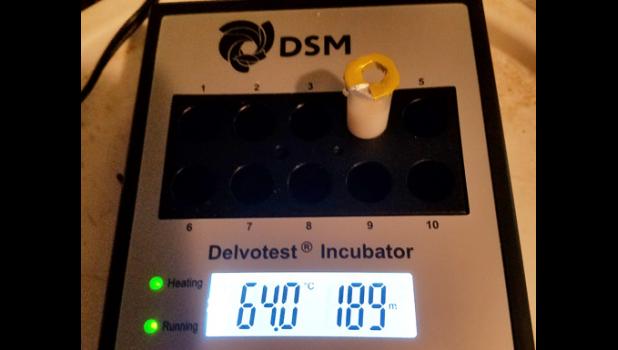
We have a special test that we use to check residues on the farm. It’s called a Delvotest. Before every tank of milk is picked up, it’s tested for antibiotics.
It’s also tested before it’s unloaded at the milk plant. This happens on all dairy farms.
If your milk is found to have antibiotic residue, that tanker is dumped. You have to pay for it. And, if there is milk on the tanker from other farms, you have to pay for their milk too.
It’s not something that is taken lightly. I know this crazy “spring” weather is just beginning, but I’m hoping with all tools in our tool box, we can keep everyone healthy.